Italy walking tours
Italy may be the best country in the world to explore on foot. Its historic centers were built long before cars, so the most beautiful places are reached through piazzas, alleys and bridges. Walk among the ancient ruins of Rome, get lost in the canals of Venice, follow the Renaissance through Florence and Siena, eat your way through Naples, Bologna and Palermo, and drive the cliffs of the Amalfi Coast or the shores of Lake Como. In the south, the cave city of Matera, the baroque streets of Lecce and the Greek theatre of Taormina show a different, sun-baked side of the country.
- cities
- 24
- 4K videos
- 187
- of walking
- 232 h
- regions
- 11
- Capital:
- Rome
- Language:
- Italian
- Currency:
- Euro (EUR)
Did you know?
- From our data24M viewsVenice is the most-watched walking city in Italy: the top 4K walking videos of it on YouTube add up to 24M views.
- From our data6 hoursOur longest walk in Italy was filmed in Naples: "Naples Walk: Montesanto, Spaccanapoli and Via dei Tribunali".
- From our data15 night walks15 of our videos in Italy were filmed after dark.
- From our data8° of latitudeOur cities in Italy run from Lake Como in the north to Taormina in the south.
Most-watched walking cities in Italy
Ranked by total YouTube views of 4K walking videos. See the full study
 ▶ 7A walk throughVeniceA city of canals, bridges and no cars at all.7 videosExplore →#1
 ▶ 7A walk throughPositanoPastel houses tumbling down cliffs on the Amalfi Coast.7 videosExplore →#2
 ▶ 6A walk throughAmalfiA former sea republic tucked into a cliff, with a cathedral above the harbour.6 videosExplore →#3
 ▶ 13A walk throughRomeThe Eternal City, where every street is a museum.13 videosExplore →#4
 ▶ 6A walk throughCapriA glamorous island of cliffs, sea grottoes and a tiny square.6 videosExplore →#5
 ▶ 6A walk throughSorrentoA cliff-top town of lemon groves facing Vesuvius across the bay.6 videosExplore →#6
All cities in Italy
Campania · all 5 cities →
 ▶ 13A walk throughNaplesThe birthplace of pizza, under the shadow of Vesuvius.13 videosExplore →▶ 7A walk throughPositanoPastel houses tumbling down cliffs on the Amalfi Coast.7 videosExplore →▶ 6A walk throughAmalfiA former sea republic tucked into a cliff, with a cathedral above the harbour.6 videosExplore →▶ 6A walk throughCapriA glamorous island of cliffs, sea grottoes and a tiny square.6 videosExplore →▶ 6A walk throughSorrentoA cliff-top town of lemon groves facing Vesuvius across the bay.6 videosExplore →
Tuscany · all 4 cities →
 ▶ 6A walk throughFlorenceThe cradle of the Renaissance, compact and walkable.6 videosExplore →
 ▶ 7A walk throughPisaThe Leaning Tower and a lively university town on the Arno.7 videosExplore →
 ▶ 6A walk throughSienaA perfectly preserved medieval city around a shell-shaped square.6 videosExplore →
 ▶ 6A walk throughLuccaA Tuscan city wrapped in Renaissance walls you can walk on.6 videosExplore →
Lombardy · all 3 cities →
 ▶ 10A walk throughMilanFashion, a gothic cathedral and the art of the aperitivo.10 videosExplore →
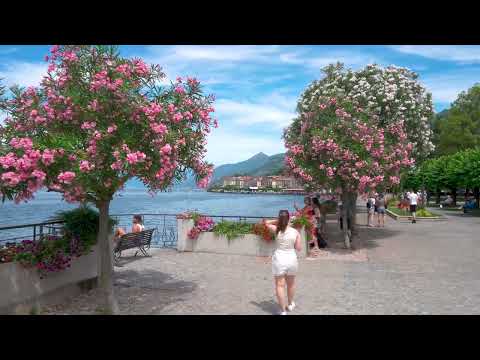 ▶ 12A walk throughLake ComoGrand villas, lakeside villages and Alpine scenery.12 videosExplore →
 ▶ 6A walk throughBergamoA medieval upper town on a hill, reached by funicular above a modern lower town.6 videosExplore →


More regions

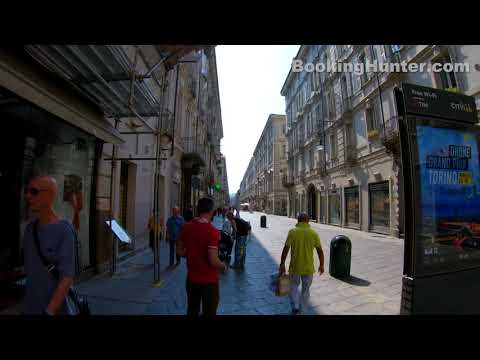

Right now in Italy
Local time, and a walk that matches the moment.
Ways to explore Italy
Trip plans
Live city cams
Festivals
Exploring Italy on foot
Italy is one of the best countries in the world to see on foot. Its historic centres were built long before cars, most are closed or half-closed to traffic, and the distances between the sights are short. What changes from city to city is the ground under your feet: flat stone streets in Florence and Bologna, hills and steps in Rome and Genoa, bridges every few minutes in Venice, and whole towns made of staircases on the Amalfi Coast.
Where to walk
Rome mixes layers of history on every walk: the Colosseum and the Forum, then baroque squares and fountains in the centre, and the ivy-covered lanes of Trastevere across the river. Florence is the most compact of the big cities, a Renaissance centre you can cross in twenty minutes. Venice has no cars at all; getting lost in its alleys and over its bridges is the point. Milan is a modern city with a Gothic cathedral at its heart and the canals of the Navigli for the evening.
In the south, Naples is loud, crowded and full of life, with the long straight street of Spaccanapoli cutting through the old centre. Along the coast, Positano, Amalfi, Sorrento and Capri are built on cliffs, so walks there mean steps and views. The five villages of the Cinque Terre are linked by coastal paths and a train, and Matera is a town of cave dwellings carved into a ravine.
For smaller, calmer walks, try the walled towns of Tuscany, Siena and Lucca, the arcaded streets of Bologna, Verona with its Roman arena, or the baroque centre of Lecce in Apulia. First time in the big three? There are day-by-day trip plans for Rome, Florence and Venice.
When to go
April to June and September to October are the best months for walking: warm, long days without the worst of the heat. July and August are hot, especially in Rome, Florence and the south, and the famous sights are at their busiest; plan walks for the early morning and the evening. Around 15 August (Ferragosto) many Italians go on holiday, and some shops and restaurants in the cities close for a week or two.
Winter is mild in the south and quiet everywhere, with short queues at the museums, but the north can be cold and foggy. In Venice, high tides (acqua alta) can flood the lowest streets, mostly between October and January; raised walkways go up on the main routes. Easter week brings big crowds to Rome.
Getting around
High-speed trains link the main cities and are usually faster than flying: Milan to Florence takes about 2 hours, Florence to Rome about 1.5 hours and Rome to Naples a little over an hour. Regional trains are slower but reach the small towns. If you buy a paper ticket for a regional train, validate it in the machine on the platform before boarding.
On the coast, ferries connect Naples and Sorrento with Capri, and in season boats run between the Amalfi Coast towns, which is often easier than the narrow coast road. A car is useful for the countryside of Tuscany, Apulia or Sicily, but leave it outside the cities: most historic centres are limited-traffic zones (ZTL) watched by cameras, and driving in without a permit brings a fine.
Good to know
- Cover your shoulders and knees to enter churches, including St. Peter's in Rome and the cathedrals of Florence, Milan and Venice.
- In smaller towns many shops close for a long lunch break in the early afternoon, and some stay closed on Sunday or Monday morning.
- A coffee drunk standing at the bar costs less than the same coffee served at a table.
- A cover charge (coperto) on restaurant bills is normal. Tipping is not expected; leaving a little extra for good service is appreciated.
- Rome's street fountains give free drinking water all day; carry a bottle and refill it.
- Watch your bag on crowded buses, metro trains and at the busiest sights.
- Venice charges day visitors an access fee on its busiest days; check the city's official site before a day trip.
Questions
- How many days do you need for a first trip to Italy?
- About ten days lets you see Rome, Florence and Venice without rushing, with three days in Rome and two or three in each of the others. With two weeks you can add Naples and the Amalfi Coast or the Cinque Terre.
- Is it better to travel around Italy by train or by car?
- Between cities, take the train: high-speed lines are fast, frequent and run from centre to centre. Rent a car only for the countryside, such as Tuscany, Apulia or Sicily, and avoid driving into historic centres, which are limited-traffic zones.
- Are Italian cities walkable?
- Yes. Most historic centres are compact and partly car-free, and you can walk between the main sights. Expect cobblestones everywhere, steep hills in Rome and Genoa, many bridges in Venice and long staircases on the Amalfi Coast, so comfortable shoes matter.
- What should you wear to visit churches in Italy?
- Shoulders and knees should be covered, for men and women. At St. Peter's and the big cathedrals the rule is checked at the door, so carry a light scarf or shawl on hot days.
- When is the best time to visit Italy?
- Spring (April to June) and autumn (September and October) are the most pleasant for walking. Summer is hot and crowded in the cities; winter is quiet and mild in the south but can be cold and foggy in the north.
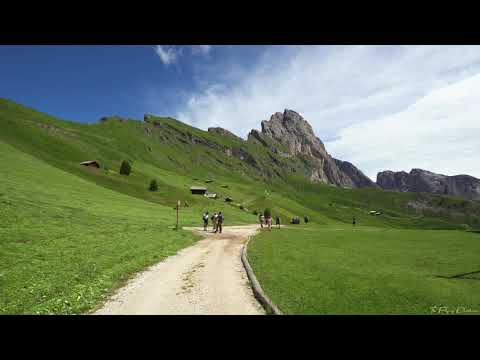
Nature walks in Italy
Beyond the cities: trails, lakes and coastlines from our nature walks.



Nightlife walks in Italy
From our nightlife walks collection.


Christmas walks in Italy
From our christmas walks collection.

Street food walks in Italy
From our street food walks collection.


Scenic train rides in Italy
From our scenic train rides collection.


