France walking tours
France is the most visited country in the world, and its cities were made for the flâneur, the idle stroller who wanders to watch city life go by. Follow the boulevards and bridges of Paris and the Renaissance lanes of Lyon, stroll the Riviera seafronts of Nice and Cannes, wander the half-timbered streets of Strasbourg and Colmar, or sip wine in golden Bordeaux and Provençal Avignon. Beyond the big cities, walk the medieval walls of Carcassonne and the ramparts of Saint-Malo, toast with champagne in Reims, or look up at Mont Blanc from Chamonix.
- cities
- 23
- 4K videos
- 164
- of walking
- 163 h
- regions
- 11
- Capital:
- Paris
- Language:
- French
- Currency:
- Euro (EUR)
Did you know?
- From our data22M viewsParis is the most-watched walking city in France: the top 4K walking videos of it on YouTube add up to 22M views.
- From our data4 hoursOur longest walk in France was filmed in Colmar: "Winter Wonderland: Colmar & Strasbourg Walking Tour".
- From our data9 night walks9 of our videos in France were filmed after dark.
- From our data7° of latitudeOur cities in France run from Lille in the north to Carcassonne in the south.
Most-watched walking cities in France
Ranked by total YouTube views of 4K walking videos. See the full study
 ▶ 14A walk throughParisBoulevards, bridges and cafés in the City of Light.14 videosExplore →#1
 ▶ 6A walk throughCannesRed carpets, the Croisette and Riviera glamour.6 videosExplore →#2
 ▶ 6A walk throughSaint-TropezA pastel fishing port turned Riviera legend.6 videosExplore →#3
 ▶ 9A walk throughBordeauxGolden stone, grand quays and the world's wine capital.9 videosExplore →#4
 ▶ 5A walk throughStrasbourgHalf-timbered houses, canals and the capital of Christmas.5 videosExplore →#5
 ▶ 13A walk throughLyonFrance's food capital, between two rivers.13 videosExplore →#6
All cities in France
Provence-Alpes-Côte d'Azur · all 6 cities →
 ▶ 15A walk throughNiceRiviera light, pastel old town and the Promenade des Anglais.15 videosExplore →
 ▶ 6A walk throughMarseilleFrance's oldest city: a gritty, sunny port with Mediterranean soul.6 videosExplore →▶ 6A walk throughCannesRed carpets, the Croisette and Riviera glamour.6 videosExplore →
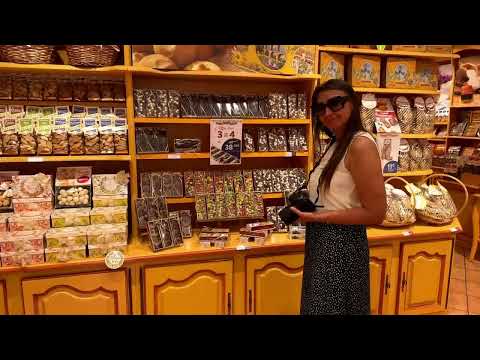 ▶ 6A walk throughAix-en-ProvenceThe city of a thousand fountains, plane trees and Cézanne.6 videosExplore →▶ 6A walk throughSaint-TropezA pastel fishing port turned Riviera legend.6 videosExplore →
 ▶ 6A walk throughAvignonThe city of popes, with a famous broken bridge in Provence.6 videosExplore →


More regions


Right now in France
Local time, and a walk that matches the moment.
Ways to explore France
Trip plans
Where to stay
Live city cams
Museum routes
Exploring France on foot
France is a country built for walking at street level. Its old town centres were laid out long before cars, most of them are now partly pedestrianised, and the day still follows a rhythm a walker can use: the morning market, the long lunch, the evening stroll along a river, a quay or a seafront promenade. Paris is the obvious start, but the fast train network puts very different cities within a few hours of it: the Roman and Renaissance layers of Lyon, the honey-coloured stone of Bordeaux, the half-timbered lanes of Alsace, the walled towns of Brittany and Languedoc, and the old ports and hill villages of Provence and the Riviera.
Where to walk
Paris is one of the great walking cities of the world, and most of it fits inside a ring of about 10 kilometres across. The classic line runs along the Seine past Notre-Dame, the Louvre and the Tuileries to the Eiffel Tower, while each neighbourhood has its own character: the hilltop village streets of Montmartre, the mansions and small squares of Le Marais and the student lanes of the Latin Quarter. Our Paris itinerary plans one to five days, the where to stay in Paris guide compares the arrondissements, and the self-guided Paris walking tour follows a real route stop by stop. The palace and gardens of Versailles are a short train ride away.
In the southeast, Lyon sits where the Rhône and the Saône meet. Vieux Lyon, on the west bank of the Saône, is a Renaissance quarter crossed by traboules, covered passages that cut through buildings from one street to the next, and above it the Fourvière hill holds a basilica and two Roman theatres. In the Alps, Annecy has an old town of canals beside a clear mountain lake, and Chamonix lies at the foot of Mont Blanc, with the Aiguille du Midi cable car rising from the town.
Provence and the Riviera, gathered on our Provence-Alpes-Côte d'Azur page, are walks of light and stone. Marseille climbs from the Vieux-Port into the old Le Panier quarter and up to the hilltop basilica of Notre-Dame de la Garde. Aix-en-Provence is a town of fountains and the plane-tree avenue of the Cours Mirabeau, and Avignon is still enclosed by its medieval ramparts around the Palace of the Popes and the broken bridge of Saint-Bénézet. On the coast, Nice pairs the Promenade des Anglais with the lanes and markets of Vieux Nice, Cannes has La Croisette and the old hill of Le Suquet, and Saint-Tropez is a small fishing port turned resort, best walked early before the day visitors arrive.
In the east, Strasbourg has an island old town around its cathedral and the canals and half-timbered houses of Petite France, and Colmar packs the same Alsatian look into an even smaller centre; both are famous for their Christmas markets. Reims is the city of the coronation cathedral and of champagne cellars dug into the chalk. In the southwest, Bordeaux lines the Garonne with 18th-century façades and the shallow Miroir d'eau in front of the Place de la Bourse, Toulouse is the pink-brick city of the Capitole, and Carcassonne is a fortified medieval city with a double ring of walls on a hill above the newer town. Biarritz is a surf and seaside town on the Basque coast, and Montpellier a lively university city with a large pedestrian old centre.
In the north and west, Lille has a Flemish-looking old town and grand squares, Rouen the half-timbered streets and the cathedral Monet painted again and again, and Saint-Malo a walled corsair city whose ramparts you can walk almost all the way round, above beaches that change dramatically with some of the biggest tides in Europe. Nantes marks a walking trail around the city with a green line painted on the ground, and Dijon does the same with small owl plaques set into the pavement of its old centre.
When to go
Spring, from about April to June, and early autumn, September and October, are the best seasons for walking: mild days, long light and fewer crowds than in summer. July and August are hot in the south and busy on every coast; August is also when many French people take their holidays, so some small shops and family restaurants in the cities close for a week or two, while seaside towns are at their fullest. In Provence, the lavender fields usually flower from about late June to late July, and the mistral, a strong, cold northern wind, can blow for days at any time of year.
Winter is quiet and grey in the north but good for museums, covered passages and food markets, and from late November the Christmas markets of Alsace, above all in Strasbourg and Colmar, fill the old towns. Fixed dates worth knowing: the Fête de la Musique on 21 June, when free concerts take over streets across the country, Bastille Day on 14 July with fireworks and parades, the Festival d'Avignon every July, and the Fête des Lumières in Lyon around 8 December, when buildings across the city are lit up for several nights.
Getting around
The high-speed TGV network makes France easy to tour without a car. From Paris, Lille is about 1 hour away, Lyon and Bordeaux about 2 hours, Strasbourg about 2 hours, Marseille about 3 hours and 15 minutes, and Nice about 5 to 6 hours; Reims and Rouen are about 45 minutes and about 1 hour and 15 minutes respectively. Some TGV stations, such as the ones for Aix-en-Provence and Avignon, lie outside the town centre and are linked by shuttle bus or local train. Regional TER trains connect the smaller places, for example Strasbourg to Colmar in about 30 minutes or Nice to Cannes in about 30 minutes.
Inside the cities, walking and public transport cover almost everything. Paris has one of the densest metro networks anywhere, and Lyon, Marseille, Toulouse and Lille have metros too, while Bordeaux, Strasbourg, Nice, Montpellier and Nantes rely on modern tram lines. Most big cities also have public bike-share schemes. Rail strikes happen from time to time and can cancel trains at short notice, so check the day before a long journey. A car is useful only for the countryside between towns, such as the villages of Provence or Alsace.
Good to know
- Always say "Bonjour" (or "Bonsoir" in the evening) when you walk into a shop, café or bakery, and "Merci, au revoir" when you leave. Skipping the greeting is considered rude.
- Many shops close on Sundays, especially outside Paris and the big tourist streets, and in smaller towns some also close for lunch, roughly from noon to 2 pm. Sunday morning, though, is prime market time.
- Check museum closing days before you go: many national museums close one day a week, often Monday or Tuesday.
- Restaurants usually serve lunch from about noon to 2 pm and dinner from about 7:30 pm; in between, many kitchens are closed, though cafés and bakeries stay open.
- Service is included in restaurant prices by law, so tipping is optional; leaving small change or rounding up for good service is common.
- You can ask for a free jug of tap water ("une carafe d'eau") with a meal.
- Outdoor markets are the easiest way to eat on foot: most towns hold one at least a few mornings a week, usually packing up around lunchtime.
- Watch for pickpockets in the Paris metro and around the busiest sights, and be wary of petition-signers and "found ring" tricks in crowded squares.
- Old town streets are often cobbled and hilly, from Montmartre to Le Panier and Vieux Lyon, so wear comfortable shoes with a good grip.
- In Paris, free public toilets (sanisettes) stand on many pavements, and most stations and big parks have toilets too.
Questions
- How many days do you need for a first trip to France?
- About ten days to two weeks covers Paris and one or two regions without rushing: four or five days in Paris, then a few days each in places like Lyon and Provence, or Bordeaux, or Alsace. With one week, pair Paris with a single region you can reach by fast train.
- Is Paris a walkable city?
- Yes, very. The centre is compact, flat along the Seine, and most famous sights are within an hour's walk of each other; the metro fills the gaps when your feet get tired. Our Paris itinerary and self-guided walking tour are built around walking.
- Which French city is best for walking after Paris?
- Lyon, Bordeaux and Strasbourg are the easiest picks: all three are about two hours from Paris by fast train, have large pedestrian old towns on UNESCO's list, and are good for two or three days of walking. For something smaller, Colmar, Annecy and Avignon can be walked end to end in a day.
- Do you need a car to travel around France?
- Not for the cities. The TGV and regional trains link all the main towns, and their centres are best seen on foot or by tram and metro. A car only becomes useful for exploring rural areas, such as the hill villages of Provence or the wine roads of Alsace.
- Are shops open on Sundays in France?
- Mostly not, outside Paris's tourist areas, big railway stations and some resorts. Bakeries and food markets are the main exceptions and are usually open on Sunday morning, so plan a market walk for then and save shopping for another day.
Nature walks in France
Beyond the cities: trails, lakes and coastlines from our nature walks.


Christmas walks in France
From our christmas walks collection.
 ColmarColmar: The Most Beautiful Christmas Place in the World
 ColmarColmar: The Most Beautiful Christmas Market in France
 StrasbourgStrasbourg Christmas Market Walk
 ParisParis Christmas Lights Walk
 StrasbourgStrasbourg Christmas Markets: Evening Walk in the Snow
 StrasbourgStrasbourg Christmas Market Night Walk around the Cathedral
 StrasbourgStrasbourg Christmas Markets Night Walk with Captions
 StrasbourgStrasbourg Christmas Markets by Day
Scenic train rides in France
From our scenic train rides collection.
 LyonCab Ride Clermont-Ferrand to Lyon Part-Dieu
 BordeauxBordeaux to Toulouse, Montpellier and Marseille: Cab Ride
 Strasbourg320 km/h TGV: Paris-Est to Strasbourg Cab Ride
 AnnecyCab Ride Annecy to Lyon Part-Dieu
 AvignonCab Ride Avignon TGV to Carpentras
 ToulouseBayonne to Toulouse-Matabiau: Cab Ride through the Pyrenees